
Our scientific approach.
Bridging traditional ethnobotanical knowledge with accredited analytical rigour through a systematic, evidence-based research methodology.
Validation framework
Each compound progresses through these stages before reaching commercial supply.
Ethnobotanical Survey
Systematic documentation of traditional uses and indigenous knowledge systems across our sourcing regions.
- Collaborative partnerships with indigenous communities and traditional healers
- Documentation of historical uses, preparation methods, and dosage practices
- Cultural context analysis and intellectual property considerations
- Identification of candidate plants based on traditional efficacy claims
Phytochemical Screening
Identification and characterisation of bioactive compounds using advanced analytical chemistry methods.
- High-Performance Liquid Chromatography (HPLC) for compound separation
- Mass Spectrometry (LC-MS/MS) for molecular identification
- Nuclear Magnetic Resonance (NMR) spectroscopy for structural elucidation
- Standardisation protocols for active constituent quantification
Bioassay & Validation
In vitro and in vivo testing to validate mechanisms of action and establish safety profiles.
- Receptor binding studies and enzyme inhibition assays
- Cell-based functional assays for biological activity confirmation
- ADME (Absorption, Distribution, Metabolism, Excretion) profiling
- Preliminary toxicology screening and safety assessment
Standardisation & Commercial Supply
Extract standardisation, batch QC, and progression to commercial supply through GMP-aligned manufacturing partners.
- Analytical method development and validation for active constituents
- Batch-to-batch consistency testing and Certificate of Analysis issuance
- Stability studies under defined storage conditions
- Manufacturing scale-up with GMP-aligned partner facilities
Analytical methods
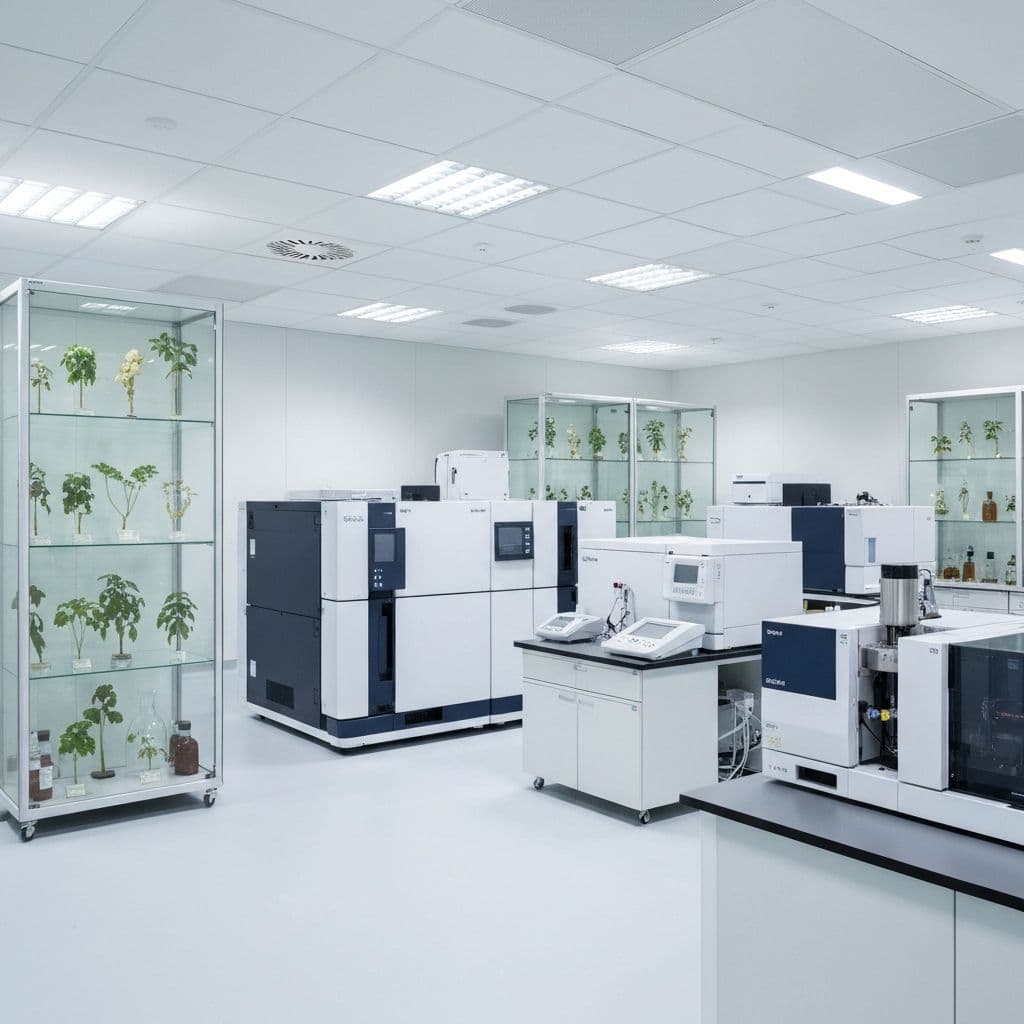
Our in-house analytical laboratory employs HPLC, ICP-MS, and supporting instrumentation for comprehensive compound characterisation, with every batch cross-checked by an independent ISO/IEC 17025 verification panel.
| Method | Application |
|---|---|
| HPLC-UV/DAD | Quantitative analysis of major constituents |
| LC-MS/MS | Trace compound identification and metabolite profiling |
| GC-MS | Volatile compound analysis and terpene profiling |
| NMR Spectroscopy | Structural confirmation and purity assessment |
| ICP-MS | Heavy metal and contaminant screening |
Regulatory compliance
All research activities are conducted in accordance with international quality standards and regulatory guidelines, ensuring data integrity and reproducibility.
GMP-Aligned
Good Manufacturing Practice alignment across our in-house operations
ISO/IEC 17025
Independent verification panel of accredited analytical labs (US)
ICH Guidelines
International Council for Harmonisation quality guidelines
GACP
Good Agricultural and Collection Practices for botanical sourcing
Data management & integrity
Our data management approach is designed for traceability, version control, and consistent documentation across in-house QC and the independent verification panel.
Electronic Lab Notebooks
Secure, timestamped documentation of all experimental procedures and observations.
LIMS Integration
Laboratory Information Management Systems for sample tracking and result management.
Data Archival
Long-term storage with audit trails ensuring data integrity for regulatory inspections.
Statistical Analysis
Validated software for experimental design, power analysis, and statistical evaluation.
Research partnerships
Interested in partnering on botanical research projects? Our methodology framework is available for collaborative initiatives.
Discuss partnerships