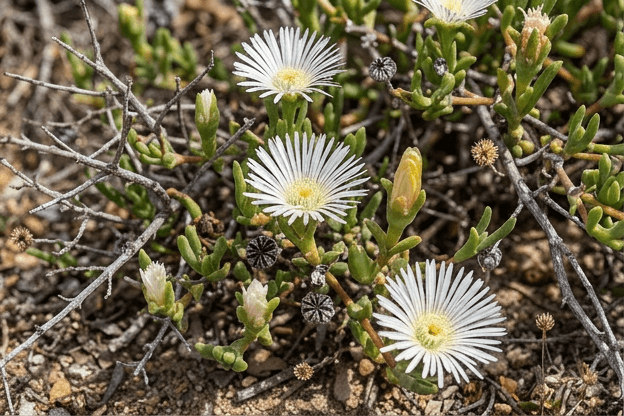
Traditional use
Used for thousands of years by indigenous South African peoples as a mood enhancer, stress reliever, and social facilitator. Traditionally chewed, smoked, or made into teas and tinctures.
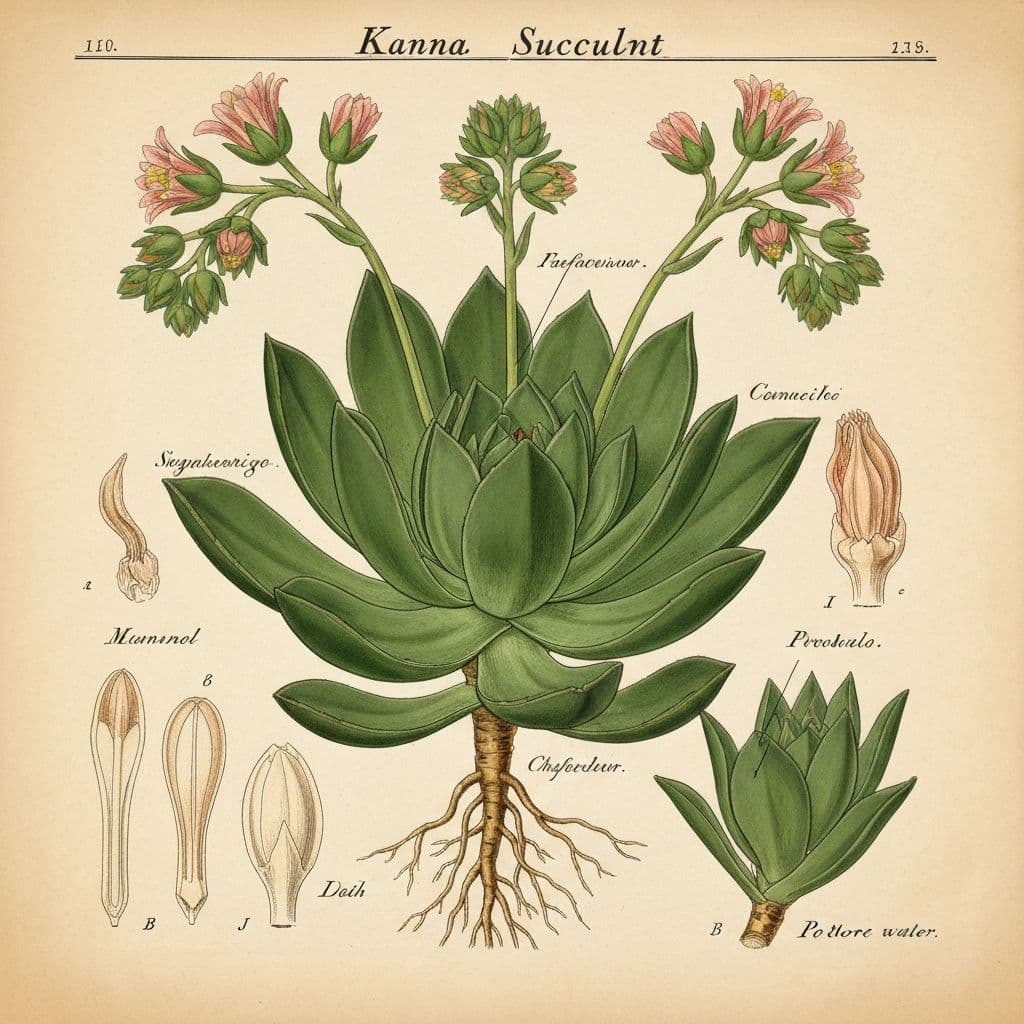
Sceletium tortuosum
Family · Aizoaceae
Kanna is a South African succulent used by the San and Khoikhoi for its mood-enhancing properties. The plant contains mesembrine-type alkaloids with unique pharmacological profiles.
Kanna (Sceletium tortuosum) is supplied by Phyto-Medichem as a standardised extract from our manufacturing facility. Marker compound: Mesembrine (C17H23NO3). Available now for commercial supply. Sourced from South Africa. Per-batch Certificate of Analysis from our in-house HPLC analytical laboratory.
| Marker compound | Mesembrine |
|---|---|
| Molecular formula | C17H23NO3 |
| PubChem CID | 394162 |
| Botanical family | Aizoaceae |
| Source region | South Africa |
| Pipeline stage | Commercial Supply |
| Commercial status | Commercial |
| Catalogue SKU | COM-KAN-001 |
C17H23NO3
The principal characterised compound for Kanna. Structure data and identifiers sourced from PubChem.
View on PubChem (CID 394162)Used for thousands of years by indigenous South African peoples as a mood enhancer, stress reliever, and social facilitator. Traditionally chewed, smoked, or made into teas and tinctures.
Commercial supply via total-alkaloid-standardised extract. Continued analytical refinement and chemotype monitoring.
Legal in most jurisdictions as a dietary supplement. Increasingly recognised by regulatory bodies as a legitimate botanical ingredient.
Sourced through ethical partnerships with cultivators in South Africa, with attention to fair benefit-sharing and sustainable cultivation practices.
Selected reviews and primary studies indexed on PubMed / PMC. The mechanism-of-action framings on this page are drawn from peer-reviewed pharmacology; consult these sources for the underlying evidence and methodology.
Review of clinical evidence and regulatory positioning.
Chemistry and pharmacology of the principal alkaloid class.
Mechanistic review — SERT and PDE4 activity profiles.
For research and ingredient-supply context only
Mechanism, traditional-use, and application descriptions on this page are presented as pharmacological research context for B2B formulators, buyers, and licensing partners. They do not constitute medical advice, regulatory claims, or a guarantee of therapeutic effect, and downstream product claims remain the responsibility of the formulator under their jurisdiction's regulations. See the regulatory notes block above for compound-specific market context.
Contact us to discuss licensing opportunities, custom development, or research partnerships around this compound.