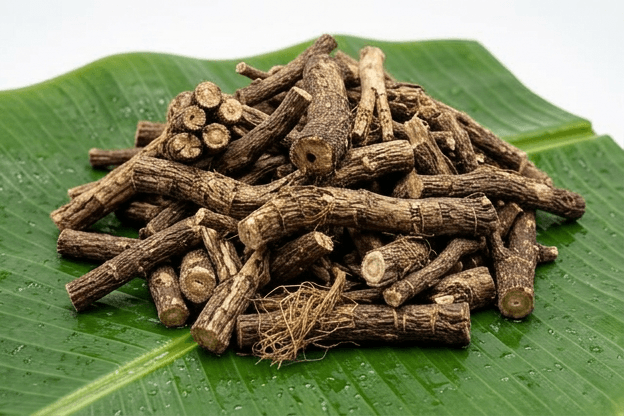
Traditional use
Used in traditional Malaysian and Indonesian medicine for centuries as a tonic for vitality, energy, and male health. Known locally as 'Malaysian ginseng'.
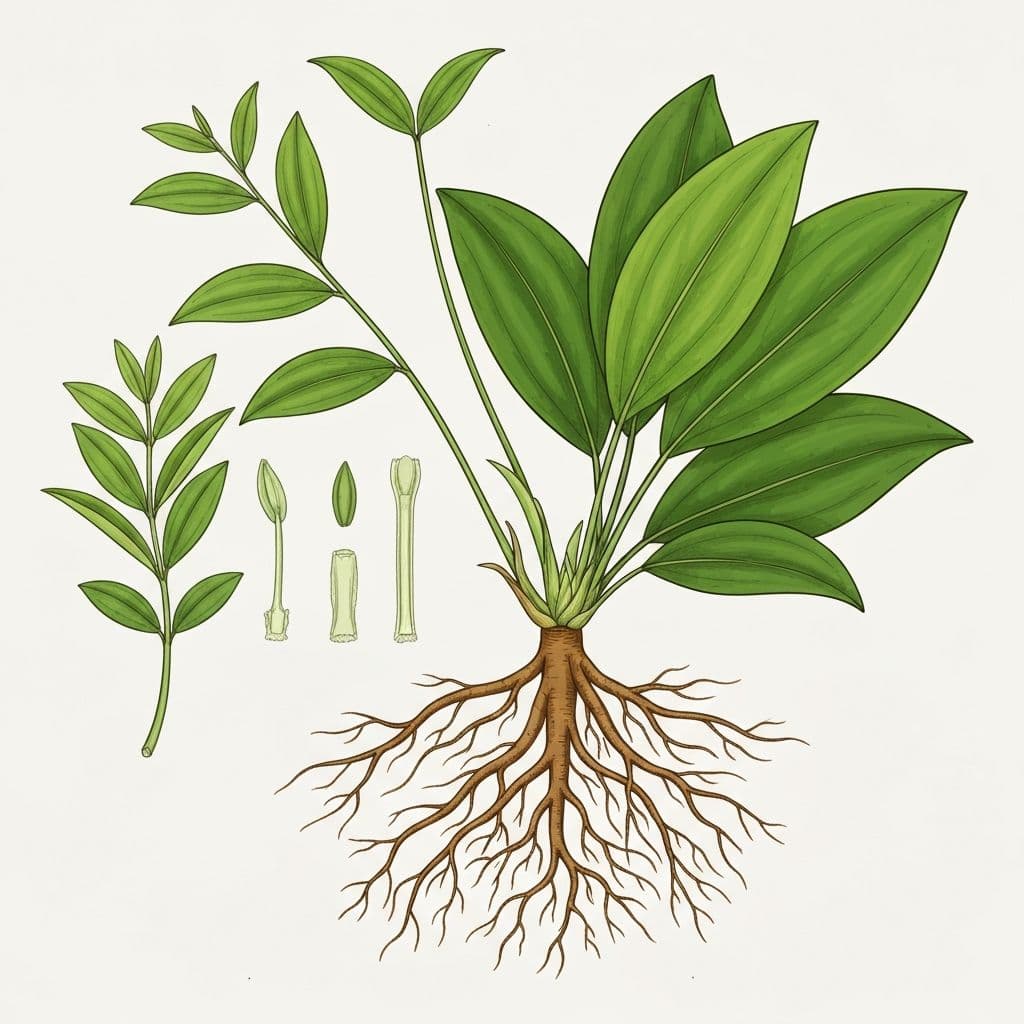
Eurycoma longifolia
Family · Simaroubaceae
Tongkat Ali is a Southeast Asian rainforest plant valued for its adaptogenic properties. The root contains quassinoids, particularly eurycomanone, which contribute to its bioactivity.
Tongkat Ali (Eurycoma longifolia) is supplied by Phyto-Medichem as a standardised extract from our manufacturing facility. Marker compound: Eurycomanone (C20H24O9). Available now for commercial supply. Sourced from Malaysia, Indonesia, Thailand. Per-batch Certificate of Analysis from our in-house HPLC analytical laboratory.
| Marker compound | Eurycomanone |
|---|---|
| Molecular formula | C20H24O9 |
| PubChem CID | 13936691 |
| Botanical family | Simaroubaceae |
| Source region | Malaysia, Indonesia, Thailand |
| Pipeline stage | Commercial Supply |
| Commercial status | Commercial |
| Catalogue SKU | COM-TKA-001 |
C20H24O9
The principal characterised compound for Tongkat Ali. Structure data and identifiers sourced from PubChem.
View on PubChem (CID 13936691)Used in traditional Malaysian and Indonesian medicine for centuries as a tonic for vitality, energy, and male health. Known locally as 'Malaysian ginseng'.
Commercial supply via eurycomanone-characterised extract. Analytical methods established for eurycomanone quantification and quassinoid profiling.
Generally recognised as safe. Widely approved as a dietary supplement ingredient across major markets including USA, EU, and ASEAN.
Sourced from cultivators in Southeast Asia with attention to sustainability and traceability from harvest through extraction.
Selected reviews and primary studies indexed on PubMed / PMC. The mechanism-of-action framings on this page are drawn from peer-reviewed pharmacology; consult these sources for the underlying evidence and methodology.
Comprehensive evidence-based review of chemistry, pharmacology, and safety.
Mechanistic review covering quassinoid pharmacology.
Systematic review of clinical and preclinical evidence.
For research and ingredient-supply context only
Mechanism, traditional-use, and application descriptions on this page are presented as pharmacological research context for B2B formulators, buyers, and licensing partners. They do not constitute medical advice, regulatory claims, or a guarantee of therapeutic effect, and downstream product claims remain the responsibility of the formulator under their jurisdiction's regulations. See the regulatory notes block above for compound-specific market context.
Contact us to discuss licensing opportunities, custom development, or research partnerships around this compound.